Filters
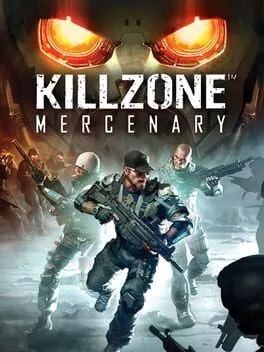
Killzone: Mercenary
TheLostPantheon/nativ
A static recompilation of the US PS Vita release with Project Nativ, which turns the game into a native program for Windows, macOS, and Linux (Steam Deck included): the game’s code is translated to C and Sony’s libraries are recompiled from your firmware. It supports version 1.00 and the 1.12 update, the recommended one, which is where Botzone and online play come from. Multiplayer and Botzone work online between copies of Nativ, on the same network or over the internet, where they find each other through the public BitTorrent DHT and connect directly; the program itself answers for the game’s login server. It plays with keyboard and mouse or a controller, and with a controller also in the PS TV layout, which moves every touch action to buttons and sticks; otherwise the touch screen is handled with the mouse or a controller cursor. It adds render scaling, 21:9 and 32:9 screens, field of view, scenery and character detail settings, and experimental 60 fps. It’s the game that takes longest to build the first time and to prepare its shaders, a few minutes. 0.1.5 (November 2), the latest release, fixed close-combat takedowns freezing at 60 fps, in Botzone and the campaign, and the HUD flickering at 60 fps; according to the guide, a line of dialogue now and then plays twice.
You needYour own US copy of Killzone: Mercenary for PS Vita (PCSA00107), at version 1.00 or, better, with the 1.12 update: the game folder copied from your Vita, with its license, or its PKG files, whose license Nativ fetches from your Vita over Wi-Fi once. Plus the PS Vita system software update file (PSVUPDAT.PUP), free from Sony’s website. 64-bit Windows 10 or 11, macOS 11 or later on an Apple silicon Mac, or x86-64 Linux, Steam Deck included.
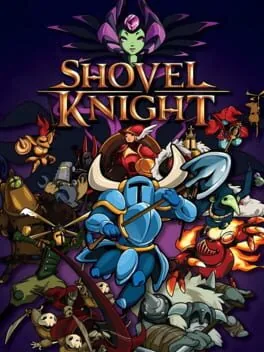
Shovel Knight
TheLostPantheon/nativ
A static recompilation of the US PS Vita release (1.00) with Project Nativ, which turns the game into a native program for Windows, macOS, and Linux (Steam Deck included): the game’s code is translated to C and Sony’s libraries are recompiled from your firmware. It was the platform’s first proof, and the first release’s notes say this game isn’t enhanced and was mainly a proof of concept. It’s the quickest to build the first time, about two minutes. The 1.08 update (Treasure Trove) isn’t supported yet: the game runs without it.
You needYour own US copy of Shovel Knight for PS Vita (PCSE00640), version 1.00: the game folder copied from your Vita, with its license, or its PKG files, whose license Nativ fetches from your Vita over Wi-Fi once. Plus the PS Vita system software update file (PSVUPDAT.PUP), free from Sony’s website. 64-bit Windows 10 or 11, macOS 11 or later on an Apple silicon Mac, or x86-64 Linux, Steam Deck included.
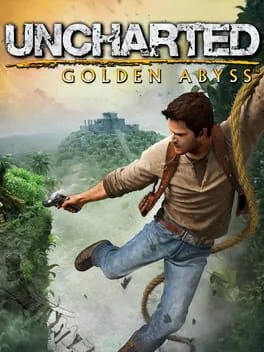
Uncharted: Golden Abyss
TheLostPantheon/nativ
A static recompilation of the US PS Vita release (1.00) with Project Nativ, which turns the game into a native program for Windows, macOS, and Linux (Steam Deck included): the game’s code is translated to C and Sony’s libraries are recompiled from your firmware, and the videos play through the firmware’s own MP4 player. The touch screen is handled with the mouse or a controller cursor, the motion sensor with the gyro of a controller such as a DualShock 4 or DualSense, and the F7 key turns on the camera’s light for the puzzles where you hold something up to the light. It adds render scaling with AMD FSR, 21:9 and 32:9 screens, field of view, draw distance, mouse camera control, and experimental 60 fps. The 1.03 update isn’t supported yet: the game runs without it. 0.1.5 (November 2), the latest release, fixed scrambled textures on AMD graphics cards at 2x scale and the black screen that could follow saving after the prologue. According to the guide, voices in cutscenes run about a third of a second ahead of the lips.
You needYour own US copy of Uncharted: Golden Abyss for PS Vita (PCSA00029), version 1.00: the game folder copied from your Vita, with its license, or its PKG files, whose license Nativ fetches from your Vita over Wi-Fi once. Plus the PS Vita system software update file (PSVUPDAT.PUP), free from Sony’s website. 64-bit Windows 10 or 11, macOS 11 or later on an Apple silicon Mac, or x86-64 Linux, Steam Deck included.
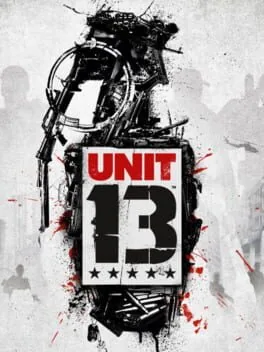
Unit 13
TheLostPantheon/nativ
A static recompilation of the US PS Vita release (1.00) with Project Nativ, which turns the game into a native program for Windows, macOS, and Linux (Steam Deck included): the game’s code is translated to C and Sony’s libraries are recompiled from your firmware. It has two-player online co-op between copies of Nativ, on the same network or over the internet, where they connect directly; voice chat and the leaderboards don’t work yet. The Network Pass, the game’s online pass, counts as owned. The touch screen is handled with the mouse or a controller cursor, and it adds render scaling, 21:9 and 32:9 screens, field of view, and experimental 60 fps. The 1.01 update isn’t supported yet: the game runs without it.
You needYour own US copy of Unit 13 for PS Vita (PCSA00014), version 1.00: the game folder copied from your Vita, with its license, or its PKG files, whose license Nativ fetches from your Vita over Wi-Fi once. Plus the PS Vita system software update file (PSVUPDAT.PUP), free from Sony’s website. 64-bit Windows 10 or 11, macOS 11 or later on an Apple silicon Mac, or x86-64 Linux, Steam Deck included.
Project Nativ
TheLostPantheon/nativ
A static recompilation toolchain that turns PS Vita games into native programs for Windows, macOS, and Linux (Steam Deck included). It handles the two halves of a Vita game separately: its code, ARMv7 with Thumb-2, VFP, and NEON, is translated to C ahead of time and compiled; the Sony libraries it loads (libgxm, libc, FIOS, and others) are recompiled with it from the firmware you download from Sony’s website, and underneath, a runtime of its own stands in for the console’s kernel and hardware: threads, graphics on your GPU, and sound. Each game has a pack with its patches and settings, which only accepts the exact versions it was written for, recognized by the SHA-256 of the game’s main program. It currently covers four games, all in their US editions: Killzone: Mercenary, Uncharted: Golden Abyss, Unit 13, and Shovel Knight, which was the first proof. The launcher walks you through the first-time setup, decrypts the firmware and your games on your PC, builds each game the first time you play it (a few minutes), and offers, depending on the game, a render scale of up to six times the Vita’s resolution, 21:9 and 32:9 screens, field of view, mouse camera control, and experimental 60 fps, plus online play between copies of Nativ. According to the README, the repository contains no Sony or game code; for decryption it carries the known Vita keys, ported from Vita3K’s code. It’s in public beta: the first release, 0.1.0, came out on October 29, and the latest is 0.1.5 (November 2), with downloads for Windows, macOS, and Linux. Its README says much of the code and documentation was written with AI assistance, under its author’s direction, and is tested on the games themselves.