Unricopie
Recompendium's launcher: it installs catalog projects from the release their author publishes, checks your copy of the game, updates without losing your saves, and manages Thunderstore mods for Zelda 64: Recompiled and Banjo: Recompiled. Version 0.1 (November 11, 2026) installs 39 projects on Windows. Made with AI assistance.
- Type
- Launcher
- Consoles
- Windows · N64 · DOS · PS4 · Xbox 360 · GameCube · Xbox · NES / Famicom · Switch
- Author
- Recompendium
Type and pick from the list; if it isn’t there, type it and press Enter. For a launcher, the games it installs; for a generic tool, leave it empty.
README badge
If this is your project, you can add it to its README: it shows its status on Recompendium and updates itself when the status changes.

[](https://recompendium.com/en/tool/unricopie/)Catalog projects it installs 39
The Legend of Zelda: Majora's Mask
Zelda64Recomp/Zelda64Recomp
The recomp that put the scene on the map (May 2024). Widescreen, high frame rate, mods, and a built-in launcher, on the RT64 renderer.
You needA Majora's Mask ROM (N64, US version, .z64).
Ship of Harkinian
HarbourMasters/Shipwright
Native port of Ocarina of Time based on the OoT decompilation and libultraship. Cross-platform (Windows, macOS, Linux, Switch, and Wii U). You supply your own ROM. 3 of its last 100 commits list Claude as a co-author.
You needA legal Ocarina of Time ROM (N64).

Sonic Unleashed
hedge-dev/UnleashedRecomp
The first Xbox 360 recomp, playable from start to finish on Windows and Linux. It proved the whole Xbox 360 generation could be ported and gave rise to XenonRecomp.
You needYour own copy of Sonic Unleashed (Xbox 360, US or European version; the Japanese version isn’t supported) plus the Title Update. DLC is optional but recommended.
Banjo-Kazooie
BanjoRecomp/BanjoRecomp
Native port of the Rare classic (v1.0.0, January 2026). Its polished launcher, which lets you pick your ROM and checks its hash, together with Thunderstore mod support, is what many people remember as “the Banjo launcher.”
You needA Banjo-Kazooie ROM (N64, US version 1.0, .z64).
RollerCoaster Tycoon 2 (OpenRCT2)
OpenRCT2/OpenRCT2
OpenRCT2: an open-source reimplementation of RollerCoaster Tycoon 2, the game Chris Sawyer wrote in x86 assembly. It aims to provide everything in the original as faithfully as possible and extends it with an improved interface, better guest and staff behavior, more editing tools, higher limits, uncapped frame rates, and cooperative multiplayer with groups and permissions. It also brings back mechanics from the first RollerCoaster Tycoon that the sequel dropped, such as the in-game mountain tool, the “have fun” objective, and launched coasters that don’t pass through the station, and with the first game’s files and its expansions it can load that game’s scenarios. It supports plugins written in JavaScript, and there are builds for Windows, macOS, and Linux, plus a launcher that keeps it up to date. Version 0.5.6 (October 10) lets you recolor terrain surfaces and edges, adds 18 colors, five of them from the original release of RollerCoaster Tycoon, and introduces a new title sequence. One of its more than 30,000 commits, from July 20, lists the Cursor agent as a co-author.
You needThe files from your own copy of RollerCoaster Tycoon 2, from the original disc or the GOG or Steam release; RollerCoaster Tycoon Classic works too. The first game’s scenarios also need your copy of RollerCoaster Tycoon with its expansions. Plus Windows 7 or later, macOS 10.13 or later, or Linux, on a little-endian architecture.
Diablo / Hellfire (DevilutionX)
diasurgical/DevilutionX
DevilutionX: a port of Diablo and its Hellfire expansion for modern systems, built on Devilution, Diablo’s source code reconstructed by reverse engineering the executable, with help from the debug symbols of the Japanese PlayStation release and a debug build of the PC game. There are builds for Windows, Linux, and macOS, and for many other platforms too. It adds custom resolutions and aspect ratios, widescreen, high frame rates, full gamepad support, multiplayer over TCP/IP and ZeroTier (no port forwarding needed), a stash for storing items, and options such as picking up gold and potions automatically or showing monster health and experience bars, off by default, plus many fixes for bugs in the original. It’s translated into more than 20 languages and comes with modding tools. The latest release is 1.5.5 (October 30, 2025). Since May, 19 of its more than 12,000 commits list Claude as a co-author.
You needThe DIABDAT.MPQ file from your own copy of Diablo, from the CD or the GOG or Battle.net release; for the shareware portion, the free spawn.mpq is enough. For Hellfire, also hellfire.mpq, hfmonk.mpq, hfmusic.mpq, and hfvoice.mpq. With the GOG release installed on Windows, nothing needs copying. Plus Windows (XP included), Linux, or macOS.
Transport Tycoon Deluxe (OpenTTD)
OpenTTD/OpenTTD
OpenTTD: an open-source transport simulation game based on Chris Sawyer’s Transport Tycoon Deluxe that tries to mimic the original as closely as possible while extending it with new features, many inspired by TTDPatch. It allows maps up to 64 times larger and stable multiplayer for up to 255 players in 15 companies, with dedicated servers. It adds new pathfinding algorithms, mammoth and multi-headed trains, conditional orders, pre-signals and path-based signalling, canals and ship lifts, larger stations that can be joined, longer and higher bridges, building on slopes, drive-through road stops for articulated vehicles and trams, and zooming further out. It supports TTDPatch NewGRFs to change graphics and behavior, player-written AIs, and game scripts, and it downloads add-on content from inside the game. It’s translated into more than 50 languages, there are Windows, macOS, and Linux builds, and it’s also distributed for free on Steam, GOG, and the Microsoft Store. The stable release is 15.3 (April 4), and 16.0 is in testing: its beta4 came out on September 20. Its contribution guidelines forbid submitting AI-generated code.
You needNo copy is needed: it runs on OpenGFX, OpenSFX, and OpenMSX, the free graphics, sounds, and music the project publishes, and the Windows installer can download them. If you have Transport Tycoon Deluxe, for DOS or Windows, it can use its graphics and sounds (sample.cat and the trg*.grf files) and its music; the Windows installer can copy them. Plus Windows, macOS, or Linux.
Twilight Princess (Dusklight)
TwilitRealm/dusklight
Native port of Twilight Princess from the zeldaret/tp decompilation: HD, high frame rate, and texture packs (v1.0.1; formerly “Dusk”). You supply your own GameCube copy.
You needYour own dump of the Twilight Princess disc, GameCube (US, Japan, or Europe) or Wii (US revisions 0 and 2, Japan, or Europe); the Korean Wii disc isn’t accepted. With a Wii disc, the game uses the GameCube version’s interface. Either .iso or .rvz works.

SimCity 2000 (OpenSC2K)
OpenSC2K/OpenSC2K
OpenSC2K: an open-source reimplementation of SimCity 2000 built with Rust and Godot; the simulation, file formats, rendering, audio, and scripting are native Rust libraries. Its behavior was worked out by observing and testing the game, analyzing its data, from public research, and by reverse engineering the original executable, and it applies many of sc2kfix’s fixes. It opens and saves the original’s .sc2 cities and adds cities from 16 to 4096 tiles per side (the original only has 128), data maps at the map’s full resolution, many more MicroSims and moving objects, a configurable terrain generator, new isometric data and trip views, more zoom levels, external graphics (HD included), sound, and music packs, MIDI music through FluidSynth, rebindable controls, autosaves every minute, a translatable interface (Korean is the first translation), and JavaScript mods, each in its own sandbox, with a Chrome DevTools console. It includes the SCURK building editor. Cities larger than 128 tiles use the .sc2x format, which the original game can’t open. There are Windows and Linux builds, x64 and arm64, and a macOS build. The first public release, 0.1.0, came out on September 25, and the latest, 0.3.0, on October 9, with JavaScript mods, HD graphics, and disasters reworked to behave as in the original. The project states that it’s developed with substantial help from AI tools, large language models among them.
You needThe files from your own copy of SimCity 2000; the Special Edition for Windows 95 (1996) gives the most complete import, and some interface graphics and the SCURK artwork only come from a complete Windows installation. It also imports the Windows 3.x, DOS, and Macintosh versions, the Network Edition, and the demos, from an installed folder (GOG’s included), a macOS app, or a mounted CD. Plus x64 or arm64 Windows, x64 or arm64 Linux with glibc 2.34 or later, or macOS 11 or later on Intel and 13 or later on Apple silicon.
3D Pinball for Windows – Space Cadet
k4zmu2a/SpaceCadetPinball
A decompilation of 3D Pinball for Windows – Space Cadet, the pinball game that came with Windows, turned into a native port. It starts from Windows XP’s pinball.exe, with its public PDB, and the 32-bit CADET.EXE from Full Tilt! Pinball: every function was decompiled with Ghidra and IDA, and the C pseudocode was turned into compilable C++. Version 2 replaced the Windows dependencies with SDL2, SDL2_mixer, and Dear ImGui, and runs on Windows, Linux, and macOS; it’s also on Flathub and Homebrew, and other authors have ported it to Switch, Vita, Wii, 3DS, and more. It adds a resizable window with scaled graphics, integer scaling, the high-resolution sprites from the Full Tilt data, gamepad support, and an option to switch between the two versions’ data. As for the 64-bit bug that killed the game (the ball stopped colliding), its author says they never found it: the decompiled code worked in 64-bit on the first try. Version 2.1.0 (October 16, 2023) focused on Full Tilt compatibility (collisions, multiball, three MIDI tracks) and added a hardware-accelerated ImGui renderer and experimental stereo sound; there have been no new commits since August 2024.
You needThe files from your own copy of 3D Pinball for Windows (the folder with PINBALL.DAT and its other files, from Windows XP for example) or of Full Tilt! Pinball, whose demo also works. Plus Windows (32- or 64-bit, XP included), macOS, or Linux (on Flathub, as distro packages, or built from source).
⑂ Fork of Supermedo/bloodborne_pc
God of War III Remastered
FelipePrado0/SpartanPort
SpartanPort (formerly gow3_pc): a Windows port of God of War III Remastered for PS4, from the same family as the Bloodborne one: it’s a fork of Supermedo’s Windows version. The game’s original x86-64 code runs directly on the CPU, with a runtime written for this game replacing the PS4 system libraries, and the graphics go to Vulkan through shadPS4’s video core with cuesta4’s fixes for this game. The author calls it playable from start to finish at native 1080p, with patches that run the engine at 120 or 240 fps, its own launcher, an in-game menu with cheats, and a shader cache that loads in the background. At other resolutions some textures look broken, and the Linux build (AppImage) is experimental. 8 of its last 100 commits list Claude as a co-author.
You needYour own PS4 dump of the game (the folder with eboot.bin, sce_module, and sce_sys), tested with CUSA01623 (US) and CUSA01715 (EU), versions 01.00 and 01.02. Plus 64-bit Windows 10 or 11, a CPU with AVX, and a Vulkan 1.3 graphics card. No game files are included.

Theme Hospital (CorsixTH)
CorsixTH/CorsixTH
CorsixTH: an open-source reimplementation of Theme Hospital, Bullfrog’s hospital management sim, that loads the graphics, sounds, levels, and movies from the original game’s files. It’s written in C++ and Lua, which holds most of the game logic, and runs on Windows, macOS, Linux, and BSD. According to the project, the whole campaign can be completed: every disease, object, and room is in, as are all events (emergencies, earthquakes, epidemics, VIP visits), the management windows, the music, and the movies. Still missing are multiplayer, the AI-run rival hospitals, the rats and their bonus level, vomit waves, and the level-won video and letter. It adds Full HD and 4K resolutions, zooming, UI scaling, subtitles, more than 20 languages, custom levels and campaigns with a built-in map editor, unlimited save files, your own music, building while paused, and rebindable hotkeys. Version 0.70.0 (July 10) added the official Russian Soft Club edition, 2x and 3x UI scaling, subtitles for the announcer, an option to turn off screen shake, MIDI devices, and an adviser message history; the latest release is 0.70.1 (August 28). It has rules for AI agents in its AGENTS.md file, and one of its more than 5,800 commits, from August and about the Windows ARM64 build, lists Copilot as a co-author.
You needThe files from your own copy of Theme Hospital, from the CD (the HOSP folder) or the GOG or EA release; on Linux they can be extracted from the GOG installer with innoextract. The demo, which the project offers on its website, works too, though it has a single level and lacks most management screens. Plus Windows, macOS, or Linux (as an AppImage, Flatpak, Snap, or distro packages).
Bloodborne (bbport)
deadinside28/bloodborne_pc
bbport: the PS4 game running natively on x86-64 Linux, and the first entry of its kind in this catalog. It’s neither a recomp nor a decomp, and its author puts it best: it’s the counterpart of Wine + DXVK for a single game. As in Wine, the original x86-64 code runs directly on the CPU, and a runtime written for this one game replaces the PS4 system libraries; as in DXVK, the graphics are translated to Vulkan, by a renderer derived from shadPS4 and heavily extended, including temporal upscaling with FSR 3.1, 4, and 4.1.1. The Supermedo fork brings all this to Windows with a launcher in 13 languages, DLSS, and beta online play. 92 of its last 100 commits list Claude as a co-author.
You needYour own decrypted Bloodborne dump with the 1.09 update (the folder with eboot.bin and sce_module). Any retail edition that has it works, such as CUSA00900, CUSA03173, or CUSA03023, because they all share the 1.09 executable, which is the one the community patches support (60/90 fps or unlocked, resolution, effects). The base 1.00 version crashes on start. The Old Hunters DLC is optional and comes from your own copy. No game files are included.
Heroes of Might and Magic II (fheroes2)
ihhub/fheroes2
fheroes2: a from-scratch recreation of the Heroes of Might and Magic II engine that uses the original game’s resources without modifying any of its files. It reproduces the game without changing its balance, and adds high resolutions, a rewritten AI that makes better decisions without the original’s hidden advantages (seeing the whole map or getting extra weekly creatures), many fixes, and interface improvements: more information on creatures and spells, instant or restartable battles, rebindable hotkeys, and more, listed on a page of its documentation. Both The Succession Wars and The Price of Loyalty campaigns are playable, and it has hot-seat games, a battle-only mode, a random map generator, and its own map editor. It’s translated into more than 20 languages and doesn’t load the original game’s saves. There are builds for Windows, macOS, and Linux, and for Android, PS Vita, and Switch too. Version 1.0.0 came out on December 21, 2022 and the latest, 1.1.17, on June 30, with a first version of automatic map playtesting in the editor and AI improvements. If you don’t own the game, the Windows installer and a bundled script offer to download the free English demo from archive.org and use its resources; this is optional.
You needThe files from your own copy of Heroes of Might and Magic II (the ANIM, DATA, MAPS, and MUSIC folders), from GOG or the Ubisoft Store for example; its bundled scripts find and extract them from an installation, and innoextract can pull them from the GOG installer. The free demo works too. Plus Windows (32- or 64-bit), macOS (the released build is for Intel; on Apple silicon, via Homebrew, MacPorts, or building from source), or Linux (x86-64 or ARM64, also on Flatpak, AUR, Homebrew, or as Debian and Ubuntu packages).
Caesar III (Julius)
bvschaik/julius
Julius: an open-source reimplementation of Caesar III that runs with the original game’s files. Its goal is the same game logic with the same look and feel: saves are 100% compatible with the original’s both ways, so it even keeps its gameplay bugs. What changes is the technical side and the interface: a resizable window at any resolution, widescreen included, a windowed mode that works at any color depth, rebindable hotkeys, mouse wheel scrolling in lists and texts, full-city screenshots, optional monthly autosaves, more information in buildings, tooltips, and advisors, the map editor inside the game, and high-quality MP3 music. It runs on Windows, Linux, and macOS, and in the browser, on Android, PS Vita, and Switch too. For gameplay changes there’s Augustus, a fork of Julius. The latest release is 1.8.0 (July 31, 2025), which added Czech, Greek, and Japanese and command-line options for fullscreen and display selection. In another of the project’s repositories, julius-support, linked from its wiki, it offers as optional downloads the game’s official 1.0.1.0 patches in several languages (needed if your copy doesn’t have them), the five MP3 music tracks Sierra once published on its website, and fan translations; the repository itself includes, among its test data, the game’s two empire map files (c3.emp and c32.emp).
You needThe files from your own copy of Caesar III, from GOG, Steam, or the CD, updated to version 1.0.1.0; for the editor, the original editor files as well. Plus Windows, Linux (as an AppImage or Flatpak), or macOS.

Super Mario Bros. Remastered
JHDev2006/Super-Mario-Bros.-Remastered-Public
A remake of and tribute to the original Super Mario Bros. games, with new levels, custom modes, extra characters, and a full level editor.
You needYour own ROM of the original Super Mario Bros. for the NES. The game checks it on start: you can pick it or drag it onto the window, or leave the .nes file next to the executable.
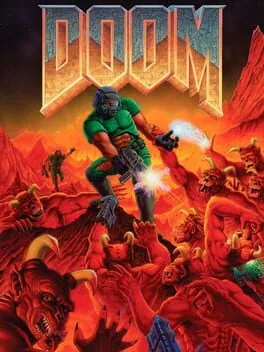
GZDoom
ZDoom/gzdoom
GZDoom: a “feature-centric” port for all Doom engine games, based on ZDoom, which adds an OpenGL and Vulkan renderer and scripting capabilities aimed at modders. The code is released under the GPL v3, with copyright held by the ZDoom and GZDoom teams since 1998 and their contributors; the original Doom code belongs to id Software, Raven Software, and contributors. The latest release, 4.14.2 (May 3, 2025), has builds for Windows and macOS and .deb packages for amd64 and arm64; the repository is still receiving changes (the latest commit reviewed is from August 2026). To build it, the README points to the ZDoom wiki.
You needThe WAD files from your own copy of whichever Doom engine game you want to play; the README doesn’t list them. Windows, macOS, or Linux.
Descent 3 (Descent3)
DescentDevelopers/Descent3
Descent3: the community edition of the Descent 3 engine, released as open source under the GPL-3.0 on April 16, 2024. It includes the 1.5 patch that Kevin Bentley and Jeff Slutter wrote, which never shipped, brought to a stable state by the Descent community. Version 1.5.0 (August 16, 2024), the first release, is the work of 28 contributors over four months: it fills in what the patch was missing, prioritizes compatibility with current CPUs and the developer experience, and keeps features mostly identical to the released code. It runs on 64-bit Linux, Windows, and macOS using SDL2, on AMD64 and ARM64 processors; 32-bit support was dropped. It also ships HogMaker, a utility that builds platform-specific HOG files with the level scripts. There are official builds for Windows x64, Linux x64, and macOS (Intel and Apple silicon). The project is still active: the last commit is from October 23. The repository includes the level scripts and demo data files (the demohog folder) and does not contain the game’s assets.
You needThe data files from your own copy of Descent 3, copied as described in the USAGE.md that ships with the executable; the project includes no game assets. Plus 64-bit Windows, Linux, or macOS (x86-64 or ARM64).
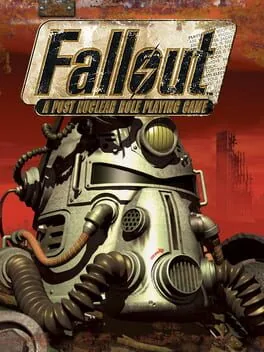
Fallout (Fallout CE)
alexbatalov/fallout1-ce
Fallout Community Edition: a fully working reimplementation of Fallout for modern systems, with the original gameplay, engine bug fixes, and some quality-of-life improvements. It builds on Fallout Reference Edition, the same author’s decompilation, which reconstructs the code of the November 1997 version 1.1 for Windows and shares much of its code with the Fallout 2 one. On Windows, fallout-ce.exe replaces falloutw.exe in the game folder; there are also builds for Linux (x86 and x64) and macOS 10.11 or later, native on Intel and Apple silicon, plus Android and iOS. The window size, at any resolution, and fullscreen mode are set in the f1_res.ini file. Among its open goals are moving to the game’s March 1998 version 1.2, which adds multilingual support, and backporting Fallout 2 improvements. The latest release is 1.1.0 (March 3, 2024), and there have been no new commits since January 2025.
You needThe files from your own copy of Fallout (master.dat, critter.dat, and the data folder), from GOG or Steam for example; on Linux and macOS they can be extracted from the GOG installer with innoextract, and on macOS the MacPlay release’s files work too. Plus Windows (32- or 64-bit), Linux with SDL2, or macOS 10.11 or later.
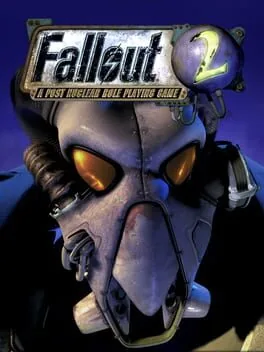
Fallout 2 (Fallout 2 CE)
alexbatalov/fallout2-ce
Fallout 2 Community Edition: a fully working reimplementation of Fallout 2 for current systems, with the original gameplay, engine bug fixes, and some quality-of-life improvements. It’s based on Fallout 2 Reference Edition, by the same author: the game’s source code reconstructed by reverse engineering the original executable, missing only a few functions the game doesn’t use. On Windows it’s a drop-in replacement for fallout2.exe in the game folder. It keeps bringing in features and fixes from sfall, the community’s engine extension, such as its critical hits, books, elevators, burst fire, and explosions, the wide interface bar, and the side panels, and it adds mouse wheel scrolling and visible loot weight. Window size and fullscreen are set in f2_res.ini. The total conversions Nevada and Sonora, in their original versions, likely work; Restoration Project, Fallout Et Tu, and Olympus 2207 don’t yet. There are builds for Windows and Linux (32- and 64-bit) and for macOS 10.11 or later (Intel and Apple silicon), plus Android and iOS. The latest is 1.3.0 (April 21, 2024), and the last commit is from February 16, 2025.
You needThe files from your own copy of Fallout 2 (master.dat, critter.dat, patch000.dat, and the data folder), for example from GOG, Steam, or the Epic Games Store; on Linux and macOS they can be extracted from the GOG installer with innoextract, and on a Mac the Macplay release works too. Plus Windows, Linux with SDL2, or macOS 10.11 or later.

SpaghettiKart
HarbourMasters/SpaghettiKart
Native port of Mario Kart 64 from the decompilation, with a built-in track editor. The decomp route to bringing Mario Kart 64 to PC. 10 of its last 100 commits list Claude as a co-author.
You needA Mario Kart 64 ROM (N64, US version, .z64).
Doom / Doom II (Chocolate Doom)
chocolate-doom/chocolate-doom
Chocolate Doom: a Doom port, built on the source code id Software released, that aims to accurately reproduce the original DOS version, bugs included, on current systems. It’s compatible with DOS demos, configuration files, and saves, and aims for the display and controls to feel the way they did back then. It started with Doom alone, but now also includes ports of Heretic and Hexen, built on the code Raven Software released, and of Strife: since Strife’s source code was lost, Chocolate Strife was rebuilt over more than four years of reverse engineering the DOS executable, with the blessing of its original programmers. It scales in hardware to any window size; music can play through an emulated OPL3 (Nuked OPL3), FluidSynth, native MIDI, or FLAC, Ogg, or MP3 music packs, and the -merge option lets you play total conversions without modifying the IWAD. Version 3.1.0 (August 1, 2024) added UDP hole punching so servers behind a router are reachable from the internet, WAD autoloading, and dragging files onto the executable on Windows. The latest is 3.1.1 (August 14, 2025), with initial support for Doom version 1.5. The published builds are for 64-bit Windows and macOS (Intel and Apple silicon); on Linux and other systems it’s built from source.
You needThe IWAD from your own copy: doom.wad, doom2.wad, tnt.wad, or plutonia.wad for Doom, Doom II, and Final Doom; heretic.wad, hexen.wad, or strife1.wad with voices.wad (Strife 1.2 or later, or Strife: Veteran Edition). The free shareware versions of Doom (doom1.wad) and Heretic (heretic1.wad), Chex Quest, and the free Freedoom IWADs work too. It finds Steam and GOG installs on its own. Plus 64-bit Windows or macOS; on Linux, by building it.
2 Ship 2 Harkinian
2ship2harkinian/2ship2harkinian
Native port of Majora's Mask on libultraship, the same engine as Ship of Harkinian. You supply your own ROM.
You needA supported Majora's Mask ROM dump (N64); you can check yours at 2ship.equipment.
UZDoom
UZDoom/UZDoom
UZDoom: a “feature-centric” port for all Doom engine games, a continuation of ZDoom and GZDoom, which adds an advanced renderer, dynamic lighting, 3D floors, extensive mod support, and modern OpenGL and Vulkan renderers. The code is released under the GPL v3 or later, with copyright held by id Software since 1993, Marisa Heit, Christoph Oelckers, and the GZDoom and UZDoom teams. It publishes builds for Windows (x86-64), macOS (ARM64), and Linux (x86-64 AppImage): the latest stable release is 5.0.3 (September 23), and there is a preview build from October 28.
You needThe WAD files from your own copy of whichever Doom engine game you want to play; the README doesn’t list them. Windows, macOS (Apple Silicon), or Linux.
Star Wars Jedi Knight: Jedi Academy / Jedi Outcast (OpenJK)
JACoders/OpenJK
OpenJK: a community effort to maintain and improve the game and engine of Jedi Academy and Jedi Outcast from the code Raven Software released, while keeping full compatibility with the existing games and mods. It doesn’t aim to add major features, rebalance, or change the gameplay: it fixes bugs, improves stability and performance, and brings it to more hardware (x86-64, Arm, and Apple silicon) and more systems (Linux and macOS). It also serves as a clean base for new mods. Jedi Academy runs stably in both single player and multiplayer; the Jedi Outcast campaign (OpenJO) works but needs attention, and its multiplayer isn’t supported: for that they recommend JK2MV. It doesn’t publish numbered releases but a rolling build: the latest is from September 29, for Windows and Linux (32- and 64-bit) and macOS (Intel and Apple silicon).
You needYour own installed copy of Star Wars Jedi Knight: Jedi Academy, for example from Steam or GOG; the OpenJK files are extracted into its GameData folder. On Linux you use the Windows version’s files, which can be downloaded with SteamCMD, and on macOS the Mac App Store version works, with SDL2 installed through Homebrew. For the Jedi Outcast campaign, your own copy of Star Wars Jedi Knight II: Jedi Outcast. Plus Windows, Linux, or macOS.
Quake (vkQuake)
Novum/vkQuake
vkQuake: a Quake port that renders with Vulkan instead of OpenGL, based on the QuakeSpasm and QuakeSpasm-Spiked ports, which build on the source code id Software released. It runs every mod compatible with QuakeSpasm, such as Arcane Dimensions, and the 2021 re-release content. Compared with QuakeSpasm, it renders and loads on multiple threads, goes past 72 Hz without breaking physics, mimics the software renderer’s underwater effect, and supports both classic and enhanced models (MD5, like the re-release’s, or MD3), true-color textures and skins, anti-aliasing, anisotropic filtering, 8-bit color emulation, and pixelated scaling, plus a mods menu. With a ray-tracing graphics card it adds dynamic shadows and the re-release’s dynamic lights. This year’s releases have added order-independent transparency, SDL3, Steam achievements, a level-selection menu, and an improved console; the latest, 1.37.0 (October 12), added ambient occlusion from monsters and items onto the level, a render resolution separate from the menus and HUD, controller gyro aiming, flick stick, and rumble, and background autosaves. Many of these additions come from Ironwail, another Quake port. There are builds for Windows (x64, with an installer, and Arm64) and Linux (AppImage); the macOS builds are published by Mac Source Ports.
You needThe files from your own copy of Quake (the id1 folder with its .pak files), from the original release or the 2021 re-release (for the latter, vkQuake goes into its rerelease folder); it finds Steam, GOG, and Epic Games Store installs on its own. On Linux, the game’s file names must be lowercase. Plus a Vulkan graphics card and 64-bit Windows (with the Visual C++ redistributable) or Linux with glibc 2.31 or later; dynamic shadows and lights need ray tracing.
The Legend of Zelda: Link's Awakening
peiikai/LASRecomp
LAS Recomp: a static recompilation of the Switch version of Link’s Awakening for Windows, Linux, and Apple Silicon macOS (Vulkan on Windows and Linux, Metal and MetalFX on Mac). The recompilation runs on your PC on first launch, from your own game files. It has an unlocked aspect ratio (21:9, for example), keyboard and controller with everything remappable, an in-game menu, and randomizer seeds you can switch without restarting. It’s in beta. Its author notes that nearly all of the code, tooling, and documentation was written by an AI (Claude, through Claude Code).
You needYour own extracted game files of Link’s Awakening, version 1.0.0. The project doesn’t explain how to obtain them.
Uncharted: The Nathan Drake Collection (Supermedo)
Supermedo/uncharted_pc
Uncharted 1, 2, and 3 from the PS4 collection running natively on Windows 10 and 11. It’s the same idea as the author’s Bloodborne port: the original game code runs directly on the PC and the graphics are translated to Vulkan. All three games launch from one launcher, at 60 fps like on PS4 or at 120 (higher is experimental), with TAA, FSR 3.1, FSR 4, or DLSS anti-aliasing, frame generation, and keyboard, mouse, and controller together, all remappable. Known problems remain, mostly in Uncharted 3. 59 of its last 100 commits list Claude, Copilot or Cursor as a co-author.
You needYour own decrypted dump of the collection (CUSA02343, CUSA02320…: the folder with eboot.bin and the data for all three games). Plus 64-bit Windows 10 (1903 or later) or 11 and a Vulkan 1.3 graphics card with at least 6 GB of video memory.
Doom 3 (dhewm3)
dhewm/dhewm3
dhewm 3: a Doom 3 port built on the source code id Software released under the GPL, aiming to bring the game through SDL to every suitable platform; it’s known to work on at least Windows, Linux, macOS, and FreeBSD. It fixes bugs from the original as they’re identified, without changing the gameplay. It’s 64-bit, uses SDL for OS support, OpenGL, and input, and OpenAL for audio, with EAX-like reverb on any hardware through OpenAL EFX. It adds gamepad support (no rumble), better widescreen and arbitrary resolution support, and an advanced settings menu opened with F10. In 1.5.1 it restored “Carmack’s Reverse” stencil shadows, which the released code left out because of a now-expired patent. It supports mods, with its own SDK, and every release comes with a separate download of adapted mods, such as Blood Mod, Grimm, and LibreCoop. Version 1.5.5 (June 8) removed several causes of microstutter, supports widescreen GUIs and BC7 textures, and added Linux Arm64 builds. Its rules only accept human-written code: contributions made with generative AI aren’t allowed. It also publishes, as an optional download, widescreen versions of several GUIs (main menu, PDA, and HUD) for the base game, Resurrection of Evil, and the mod The Lost Mission, made by Arl by adapting the game’s interface files.
You needThe files from your own copy of Doom 3 (the base folder, with pak000.pk4 to pak008.pk4), patched to 1.3.1; Resurrection of Evil is supported too. Doom 3: BFG Edition doesn’t work. Plus Windows (the official builds are 32-bit), x86-64 or Arm64 Linux with SDL 2.0.12 or later, or macOS (Intel or Apple silicon) with the signed build from Mac Source Ports.
⑂ Fork of bvschaik/julius
Caesar III (Augustus)
Keriew/augustus
Augustus: a fork of Julius, the open-source reimplementation of Caesar III, that adds gameplay changes on top of Julius’s interface improvements. Julius keeps the original’s logic and saves; Augustus loads Caesar III and Julius saves, but its own saves only work in Augustus. It adds roadblocks, special market orders, a global labor pool, partial warehouse storage, higher limits, and zoom, and over the years it has added monuments and grand temples, taverns, arenas, new resources (stone, sand, bricks, concrete, and gold), highways, cart depots, custom empires, and scenario events in the map editor, with new graphics under a CC BY-SA 3.0 license. Everything is explained in an English manual, translated into other languages. There are builds for Windows, Linux (AppImage), and macOS, plus Vita, Switch, Android, and the browser. The latest stable release is 4.0.0 (December 28, 2023); development builds, which already include 64-bit Windows and Flatpak, keep coming, with the latest change on October 16. To update the game to 1.0.1.0, the README points to a Julius page that offers, in another of that project’s GitHub repositories, the game’s patches for each language, mostly the official Sierra ones.
You needThe files from your own copy of Caesar III, updated to 1.0.1.0. Augustus can be copied into the game folder or run from a separate one, in which case it asks where the game is; it needs write access to that folder, since saves are stored there. Optionally, it supports the high-quality MP3 files Sierra once published on its website. Plus Windows, Linux, or macOS.
Starship
HarbourMasters/Starship
Native port of Star Fox 64 on libultraship. You supply a US 1.0 or 1.1 ROM. It’s the decomp-based sibling of the original recomp, which is now gone.
You needA Star Fox 64 ROM (N64, US version 1.0 or 1.1 Rev A).
⑂ Fork of n64decomp/perfect_dark
Perfect Dark (N64)
perfect-dark-pc-port/perfect_dark
Cross-platform native port of Perfect Dark from the decompilation: mouselook, widescreen, and high frame rate. You supply your own ROM.
You needA Perfect Dark ROM (N64; US version 1.1, “ntsc-final,” recommended).
Celeste 64: Fragments of the Mountain
EXOK/Celeste64
The source code of Celeste 64: Fragments of the Mountain, the 3D platformer the original Celeste team made in under two weeks for Celeste’s sixth anniversary and released for free in January 2024. Its makers compare it to a weekend game jam entry, built with libraries mostly intended for 2D games: it’s written in C# with Foster and SDL3, its levels were made in TrenchBroom, its models in Blender, and its textures in Aseprite, and its audio uses FMOD. The repository holds the whole game: the code, under the MIT license, and all of the content (models, textures, maps, audio, and text), which still belongs to Maddy Makes Games, though its makers allow it to be used in non-commercial mods, levels, and fan games as long as it’s clear they didn’t make them. GitHub has builds for 64-bit Windows, Linux (x64, ARM64, and ARM32), and macOS (Intel and Apple silicon); the latest is 1.1.1 (February 6, 2024). Since then the code has moved to SDL3 and .NET 10, reached version 1.2.0 in August 2026, and in September gained camera inversion options and a language selector with Korean and German translations.
You needNo copy needed: the game is free, and its makers publish the whole game, with all of its content, on GitHub and itch.io. To play, 64-bit Windows 10 or later, Linux with glibc 2.35 or later (x64, ARM64, or ARM32), or macOS Monterey or later (Intel or Apple silicon); to build it, .NET 10.

Legend of Sword and Fairy (SDLPal)
sdlpal/sdlpal
SDLPal: a cross-platform, SDL-based reimplementation of Xian Jian Qi Xia Zhuan (仙剑奇侠传), Softstar’s Chinese RPG known as PAL, that runs on the original game’s data. Wei Mingzhi created it in 2009, and a team maintains it today; many of its concepts come from the PAL Research Project’s documentation. It isn’t an emulator: the game runs as a native program, and only the OPL2 and OPL3 sound chips are emulated (with cores from DOSBox, MAME, and Chocolate Doom) to play the DOS version’s RIX music. It supports data from the DOS and Windows 95 versions and can combine the best of each, such as item descriptions in the DOS version or RIX music in the Windows 95 one, whose AVI videos it also plays. It adds MIDI, OGG, or MP3 music, translations through external message and font files, image filters with RetroArch GLSL shaders (experimental), and a settings window at launch, and its saves work with the original game’s and vice versa. There are builds for Windows, Linux, and macOS, plus Android, iOS, Wii, 3DS, the browser, and a libretro core. The latest release, 3.0.2025.0616 (June 2025), already uses SDL3; in 2026 work continued with controller and script interpreter fixes, and the Visual Studio build regained Windows XP support.
You needThe data files from your own copy of Xian Jian Qi Xia Zhuan: the DOS version, on floppy disks or CD, or the Windows 95 version, in Traditional Chinese or the Simplified Chinese “98 柔情篇”; the Sega Saturn version doesn’t work. The project recommends the version sold on Steam, and its wiki links Chinese sites where it can be downloaded legally for free. Plus Windows (XP included), Linux (as an AppImage), or macOS.
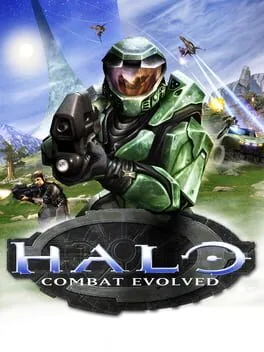
⑂ Fork of bnunu/halo-1
Halo: Combat Evolved (OpenCE)
OpenCommunityEdition/OpenCE
OpenCE (Open Community Edition, formerly halo-ce-universal): a port of the Halo: Combat Evolved decompilation, made from development build 2342 of the original Xbox release, for Windows, Linux, Android, and the browser; a macOS version is in progress. It isn’t an emulator: the game’s own code is compiled for each platform, with a new layer in place of the Xbox hardware, OpenGL for graphics, and SDL3 for sound and controllers. It starts from bnunu/halo-1, a fork of the punpckhdq/halo decompilation, which has its own entry. It adds multiplayer for up to 128 players with cross-play across every platform and four-player split screen, peer-to-peer internet games with a server browser and invite links, online campaign co-op, voice chat, and automatic map downloads. It supports Halo Custom Edition maps and mods made with the Halo PC tools. By default it looks as it did on the Xbox; the options add any resolution, a frame for every display refresh while the simulation stays at 30 ticks a second, an 80–150° field of view, anti-aliasing, anisotropic filtering, HDR, and a HUD redrawn at high resolution. It updates itself, and every build that passes on all four platforms is a new release. One of its last 100 commits lists Claude as a co-author.
You needYour own Halo: Combat Evolved disc image for the original Xbox (.iso or .xiso). Any version works: the European release’s maps are adjusted to play with the North American ones. Custom Edition maps need bitmaps.map, sounds.map, and loc.map from your own Halo Custom Edition install.
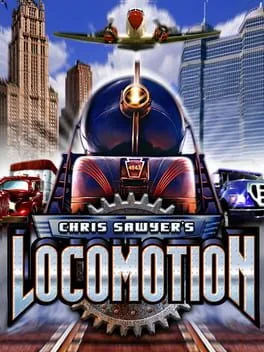
Chris Sawyer's Locomotion (OpenLoco)
OpenLoco/OpenLoco
OpenLoco: an open-source reimplementation of Chris Sawyer’s Locomotion, the transport company simulator and spiritual successor to Transport Tycoon, that runs on the original game’s data. The original was written in x86 assembly on top of the RollerCoaster Tycoon 2 engine; the project moved the game to C++ function by function, with a compatibility layer to coexist with the original code, and finished in December 2025: 25.12 (December 20) brought the first native, standalone 64-bit builds for Windows, Linux, and macOS. It aims to improve the game the way OpenTTD improved Transport Tycoon and OpenRCT2 improved RollerCoaster Tycoon, and it already adds resizable windows, 2x and 4x zoom levels, PNG heightmaps of any size, signal placement at fixed intervals along the track, a jukebox for choosing music, and fixes for bugs in the original. Its Open Graphics subproject creates free replacement objects for the game’s content (vehicles, stations, tracks, roads, the interface), and in September it started adding new objects with the North American Expansion. It’s still bound by the original save format (SV5/SC5) until it has its own, and it doesn’t have multiplayer yet. It puts out a release almost every month; the latest is 26.09 (September 18).
You needThe files from your own copy of Chris Sawyer’s Locomotion, sold on Steam and GOG; on Linux it looks for the usual Steam and GOG install locations on its own. Plus Windows (64- or 32-bit), 64-bit Linux (as an AppImage), or Apple silicon macOS; the macOS builds are unsigned and unnotarized.
⑂ Fork of id-Software/DOOM-3-BFG
Doom 3: BFG Edition (RBDOOM-3-BFG)
RobertBeckebans/RBDOOM-3-BFG
RBDOOM-3-BFG: a port of Doom 3: BFG Edition built on the source code id Software released in 2012, which Robert Beckebans has been modernizing since that year with contributions from more than 40 people; it aims to bring its technology closer to Doom (2016) without changing Doom 3’s gameplay. It renders with Direct3D 12 or Vulkan through NVRHI and adds physically based rendering (PBR), baked global illumination that lights up the formerly pitch-black areas, soft shadows, HDR with ACES tone mapping, SMAA and TAA, ambient occlusion, screen-space reflections, and retro rendering modes that mimic the Commodore 64, Amstrad CPC, Mega Drive/Genesis, and PlayStation. It plays the Bink videos, lets you skip cutscenes, and fixes the netcode for playing with friends over IP. For modding it supports TrenchBroom maps (with an adapted build of the editor in the download), glTF and OBJ models, PBR materials, and .pk4 packages. Version 1.6.0 (May 10, 2025) added the retro modes, Intel’s Masked Software Occlusion Culling (MOC), reflective blood, and a new light editor. One of its more than 2,700 commits, from July 2026, lists Claude as a co-author. The repository includes some of the game’s text files (entity declarations, materials, and scripts), and the roughly 1.6 GB download also carries precomputed global illumination for the game’s maps, which is optional: without it, the engine falls back to an environment probe built into the executable.
You needThe base folder from your own copy of Doom 3: BFG Edition, from Steam or GOG, patched to the latest version. Plus 64-bit Windows with a Direct3D 12 or Vulkan graphics card; on Linux and macOS you have to build it and copy the .pk4 files from the Windows download.
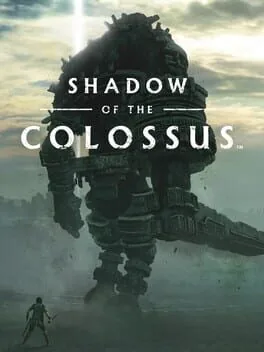
Shadow of the Colossus (AjncSystem)
AjncSystem/ShadowOfTheColossus-PC
Native Windows port of Shadow of the Colossus for PS4, Bluepoint’s 2018 remake: the game’s own x86-64 code runs directly on the PC’s CPU, and the PS4 GPU is translated to Vulkan. It isn’t a full emulator but a loader with the system functions the game needs, in the style of the Bloodborne Windows port. It comes with a launcher with a game library and display and control options; keyboard and controller at the same time, with mouse camera; a 60 fps mode, 16x anisotropic filtering, a PS4 Pro mode, and output up to 4K. Its author ships fixes almost daily, and there are still known issues, for example on AMD graphics cards. 64 of its last 100 commits list Claude as a co-author.
You needYour own dump of the PS4 version: the European 1.01 (CUSA08809) or the US 1.00 (CUSA08034), the two where the 60 fps and 16x filtering patches work; other versions run at 30 fps and, for sound, two system modules from your own console (libSceNgs2.sprx and libSceUlt.sprx). Plus 64-bit Windows 10 or 11 and a Vulkan 1.3 graphics card.

Skate 3 (skate3recomp)
mchughalex/skate3recomp
Playable native port of Skate 3 for Windows, Linux, and macOS (v1.0.4): about 165 fps at 4K on an RTX 4090. It supersedes portingpete’s earlier attempt.
You needYour own Skate 3 ISO (Xbox 360). The game downloads Title Update 3 by itself and checks it before using it. DLC is optional and comes from your own copy.